Italian Nursery Rhymes and Stories for Babies: A Gentle Start
Your baby doesn't know that Italian is supposed to be hard. She doesn't care about verb conjugations or whether your accent matches your nonna's. When you sing "Ninna Nanna" or whisper "Stella Stellina," you're not teaching a foreign language—you're sharing the sound of home.
For heritage Italian families, starting Italian from the crib isn't about raising bilingual prodigies. It's about keeping a thread alive. The same melodies your grandmother hummed, the same rhythms that lulled generations of babies to sleep, can become part of your child's earliest memories without flashcards, pressure, or guilt when you skip a day.
Why Italian Nursery Rhymes Matter More Than You Think
Nursery rhymes do linguistic work that even the best baby apps can't replicate. The repetition, the rhythm, the musicality—these aren't just charming. They're how babies learn to distinguish phonemes, anticipate patterns, and eventually produce sounds themselves.
Italian nursery rhymes carry specific gifts:
- Vowel clarity: Italian's five pure vowel sounds are pronounced exactly as written, making them ideal for tiny ears learning to differentiate speech sounds
- Musical cadence: The singsong quality of rhymes like "Giro Giro Tondo" teaches sentence melody before vocabulary
- Cultural memory: These aren't just words—they're artifacts, carrying gestures, games, and the voices of everyone who sang them before you
You're not drilling vocabulary. You're letting your baby marinate in the sound pattern of Italian during the precise window when their brain is cataloging which sounds matter in their world.
Classic Italian Nursery Rhymes to Start With
You don't need an Italian literature degree. Start with what's been smoothed perfect by centuries of use:
Stella Stellina
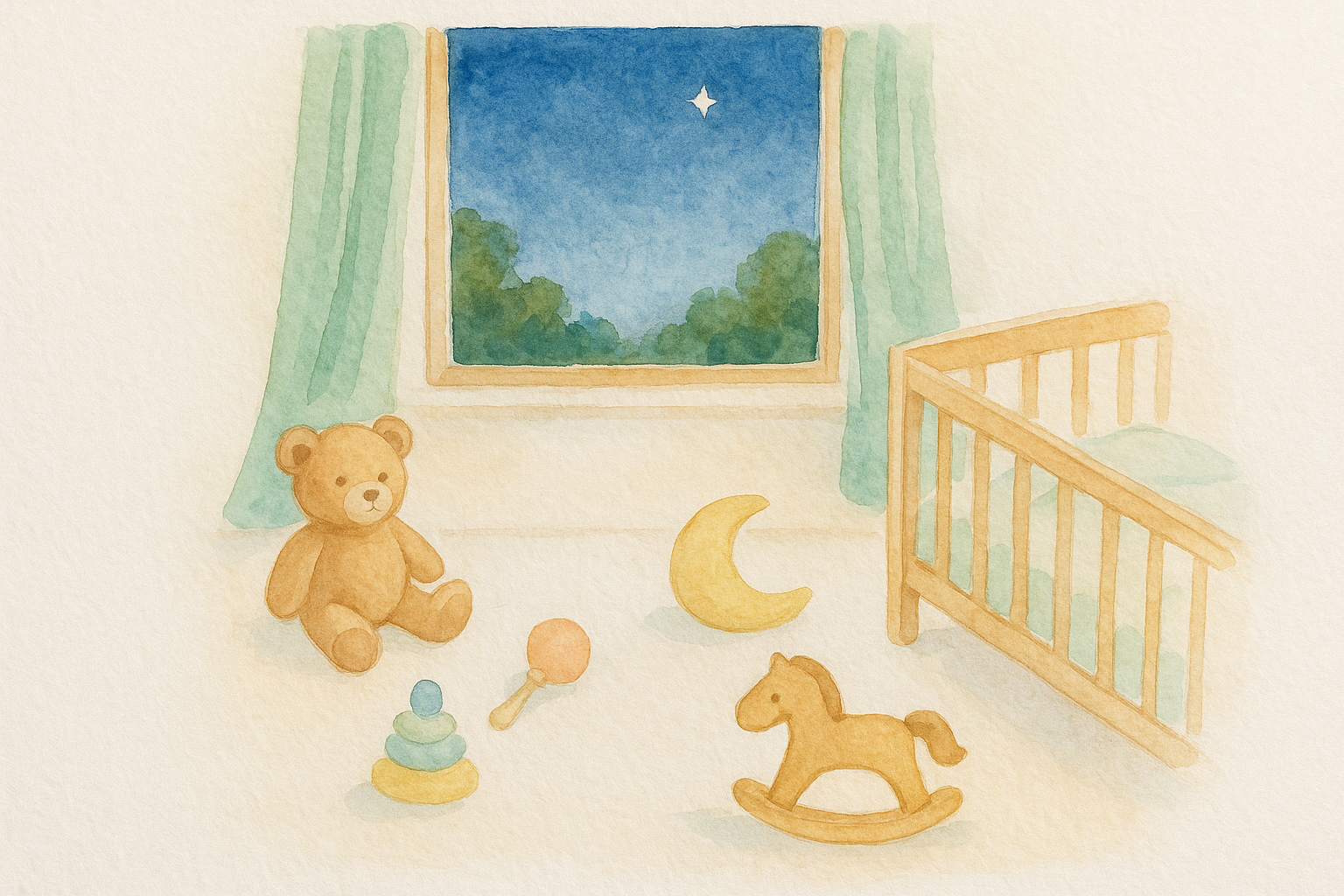
"Stella stellina, la notte s'avvicina..." This gentle rhyme about the evening star is perfect for bedtime. It's short, melodic, and pairs beautifully with pointing at the window as daylight fades. The rhythm naturally slows as you say it, cueing your baby that sleep is coming.
Giro Giro Tondo
The Italian version of "Ring Around the Rosie" is bouncier, more playful. Even tiny babies enjoy the gentle motion when you hold them and sway, and toddlers will eventually join the circle game. The "casca il mondo, casca la terra" ending delights with its gentle drama.
Ninna Nanna
Less a specific rhyme than a form—every Italian region has variations. "Ninna nanna, ninna oh, questo bimbo a chi lo do?" The call-and-response structure works even when you're exhausted at 2 a.m. Your baby doesn't critique your singing; they just hear comfort.
Conta Conta
Counting rhymes like "Conta conta, ben contare" combine numbers with rhythm. Use them during diaper changes, while dressing, anytime you need a pleasant distraction. The numbers themselves matter less than the routine and the sound.
Moving from Rhymes to Simple Stories
Somewhere around six to nine months, babies start tracking simple narratives—not plot exactly, but the arc of your voice, the turn of a page, the anticipation of a repeated phrase. This is when Italian stories become magic.
Keep it simple at first:
- Board books with single words: "La mela" (the apple), "Il cane" (the dog)—just pairing Italian sounds with images
- Repetitive tales: Stories that repeat phrases ("Ma dov'è?") let babies anticipate and eventually "participate" with sounds
- Familiar narratives: Italian versions of stories they know in English create bridges between languages
The goal isn't comprehension. It's exposure. You're building what linguists call "receptive vocabulary"—words your child recognizes and understands even if they can't produce them yet. This reservoir will matter later, sometimes years later, when production begins.
At Favola, we create personalized Italian storybooks where your child becomes the protagonist, making the language immediately relevant to their world. But whether it's a custom book or your worn copy of a classic, the magic is in the ritual: Italian sounds, your voice, your baby's focused attention.
Creating Routines Without Pressure
Heritage language transmission fails most often not from lack of resources but from guilt and inconsistency. You miss a week, feel bad, and then avoid the whole thing. Here's permission to abandon perfection:
Anchor Italian to existing routines: One lullaby at bedtime. One rhyme during the morning diaper change. That's it. Consistency beats intensity every time.
Use what you remember, even fragments: You don't recall all the verses to "Ninna Nanna"? Sing the two lines you know, then hum. Your baby doesn't have the original lyrics to compare.
Let English dominate when you're tired: This isn't immersion preschool. You're not raising a bilingual by twelve months. You're planting seeds. Some days you water them, some days you don't, and they still grow.
Invite Italian in through multiple voices: Calls with nonna where she sings the old songs. Audio recordings. Other Italian-speaking families. Your voice doesn't have to carry the entire language alone.
What to Do When You Don't Know the Words
Most heritage Italian families face this gap: we remember the melodies, the feeling, maybe the first line, but not the full rhymes our grandparents sang. This isn't failure—it's normal diaspora experience.
Practical solutions:
- Search YouTube for "filastrocche italiane per bambini"—you'll find versions with lyrics on screen
- Ask older relatives to record voice memos of the rhymes they remember, even imperfectly
- Use apps like "Italian Nursery Rhymes" that provide text and audio
- Join online groups of Italian heritage parents—someone always knows the missing verse
And here's the secret: even if you're reading phonetically from a screen, even if your pronunciation makes your nonna wince, your baby is getting what matters—exposure to Italian phonemes during the critical window, and the message that this language is part of their story.
Building a Small Italian Library for Baby
You don't need dozens of books. A small, rotated collection works better than overwhelming choice:
Board books with textures and flaps: "Il Bruco Maisazio" (The Very Hungry Caterpillar) in Italian combines a familiar story with tactile engagement. Babies will chew the corners—this is fine.
Photo books of family: Make a simple board book with pictures of nonna, nonno, cousins, labeled in Italian. "This is family" becomes "this is Italian."
Personalized storybooks: When your child is the character, language becomes identity. Books that feature your baby by name, in situations they recognize, make Italian feel like theirs, not an external subject to study.
Classic Italian children's authors: Even if your baby doesn't track the plot yet, books by Gianni Rodari or Roberto Piumini enter your home library now and grow with your child.
Rotate books every few weeks. Babies love repetition but also need novelty. The same five books for a month, then swap in five different ones. Check our personalized book options to add stories that make your specific child the hero of Italian adventures.
FAQ
When should I start using Italian nursery rhymes with my baby?
From birth, or even before. Babies begin recognizing their mother's voice and language patterns in the third trimester. Singing Italian lullabies during pregnancy means your baby is born already familiar with those rhythms. But truly, any time you start is the right time—language windows stay open longer than we used to think, and even sporadic exposure in infancy creates advantages.
Do I need to be fluent in Italian to share nursery rhymes and stories?
Absolutely not. Many heritage families have partial Italian—we understand more than we speak, or we speak a regional dialect mixed with English. What babies need is exposure to Italian sounds and the emotional message that this language matters to you. Read phonetically, sing imperfectly, mix languages in the same session. Authenticity matters more than accuracy.
How much Italian exposure does a baby need to maintain heritage language?
Research suggests that babies need at least 20-30% exposure to a language to develop productive skills, but even less creates receptive understanding and easier learning later. If Italian is 10% of your baby's language exposure through rhymes, stories, and family calls, you're building a foundation. This isn't about raising a bilingual baby—it's about keeping a door open.
What if my baby seems to prefer English books and songs?
Babies often show preference for the majority language because it's everywhere—in stores, on TV, in most conversations. This doesn't mean Italian isn't getting in. Keep offering both without forcing. Sometimes a child will seem to ignore Italian for months, then suddenly produce an Italian word at eighteen months. Trust the process, and remember that even passive exposure counts.
The Long Game of Heritage Language
Here's what no one tells you: your baby won't thank you for Italian nursery rhymes at six months, or even at six years. The gratitude comes later, sometimes much later—when they hear their great-grandmother's voice in a phrase they didn't know they remembered, or when they connect with cousins in Italy, or when they simply have access to a part of their identity that might have been lost.
You're not teaching Italian. You're keeping a door unlocked. Some days you'll walk through it together, some days it'll stay closed, but it's there. The nursery rhymes, the simple stories, the sound of Italian as a language of love and routine—these are the hinges that keep that door from sealing shut.
Starting from the crib means starting before pressure, before self-consciousness, before language becomes achievement rather than belonging. It means your child's first experience of Italian is comfort: your voice, a familiar melody, the soft sounds that mean safety and sleep and family.
That's worth more than fluency. That's the foundation fluency builds on, if it comes, and the gift that remains even if it doesn't.
Ready to make Italian feel like home? Create a personalized Italian storybook where your child is the hero, and watch their face light up at seeing themselves in the language of their heritage.